Urban Mobility Platform
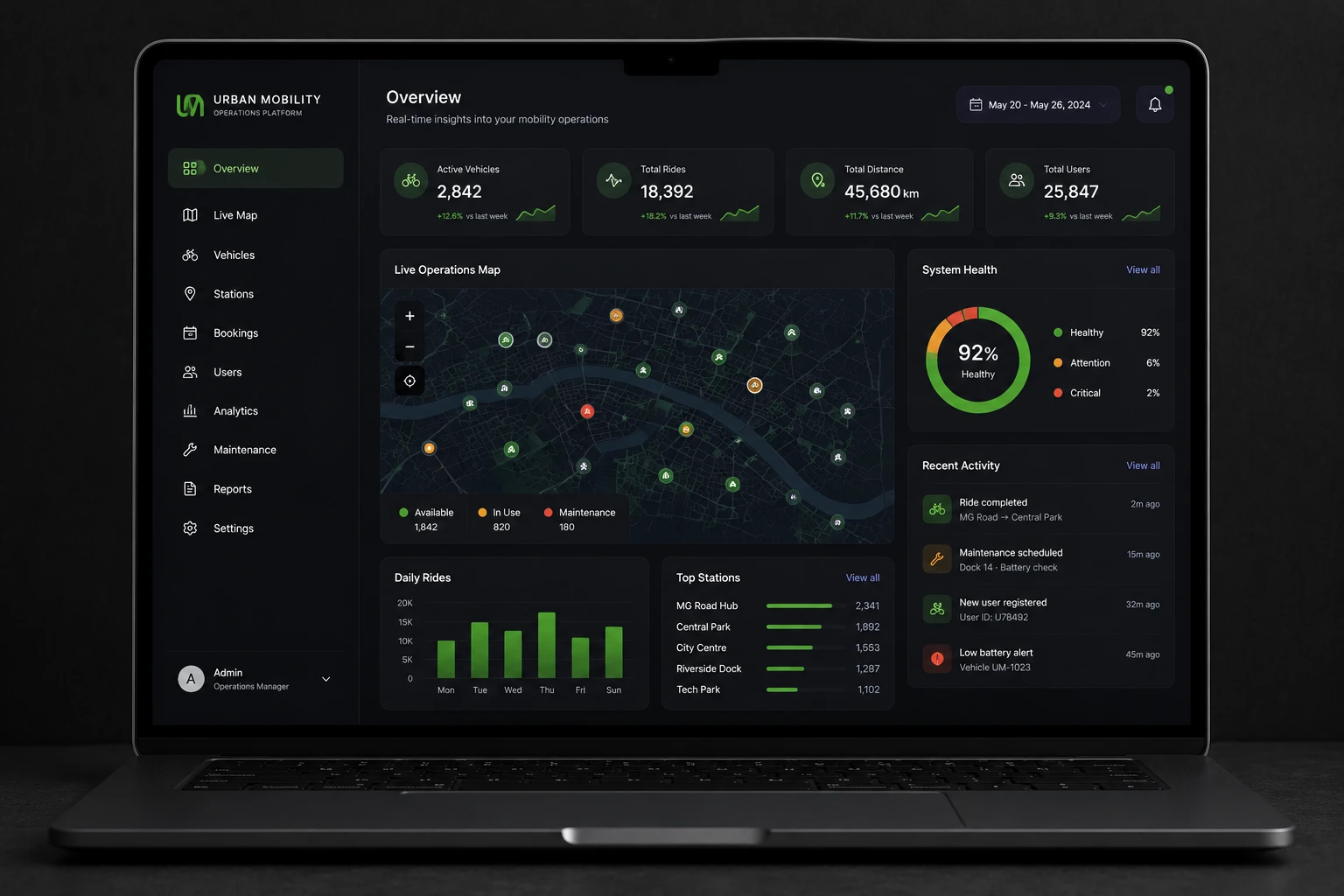
Urban bike rental and mobility platform making sustainable transportation accessible across Indian cities.
Role
Frontend Developer
Duration
8 weeks
Industry
Mobility & Transportation
Team Size
3 (Developer, Designer, Backend)
The Problem
An urban mobility startup operating across Indian cities needed a web application to help users find, rent, and manage bike subscriptions. The platform required real-time station data integration, an interactive map interface for locating available bikes, and a seamless subscription management flow — all while maintaining fast performance on mobile devices in areas with unreliable connectivity.
The Solution
I built a React application with TypeScript, integrating multiple APIs for real-time bike availability and station data. The map interface used a lightweight approach to minimise DOM nodes while providing an intuitive bike-finding experience. Netlify Functions handled API proxying and data aggregation server-side. I implemented an offline-first strategy using service workers for station data caching, enabling basic functionality without internet connectivity.
Challenges
Integrating real-time data from bike station APIs while maintaining sub-second response times was the core technical challenge. I built a caching layer with stale-while-revalidate patterns and implemented optimistic UI updates — showing estimated bike availability immediately and updating with real data in the background. The map needed to work smoothly on low-end devices common in the Indian market.
Outcomes & Metrics
Performance Improvements
Achieved 92 Lighthouse Performance on mobile despite the complexity of map rendering and real-time data. Implemented virtualised list rendering for station lists, reducing DOM nodes by 70%. Code splitting reduced initial JavaScript by 45%. Service worker caching enabled near-instant repeat visits.
SEO Improvements
Implemented server-side rendering for public-facing station and route pages to ensure crawlability. Added structured data for bike stations and rental services. Created a dynamic sitemap. Meta descriptions are generated per city with relevant station information.
Accessibility Improvements
Achieved 97% WCAG 2.1 AA compliance. Every interactive element — including map markers and station selectors — is fully keyboard-navigable. Screen reader announcements for station updates and real-time changes. High-contrast mode for the map interface. Reduced motion and animation for vestibular disorder considerations.
Business Outcome
The platform serves 5,000+ active monthly users across Indian cities. User session duration increased by 22% as users explored additional stations and subscription plans. The accessibility-first approach received positive feedback from users. The platform continues to expand to new cities as the primary digital touchpoint.
Lessons Learned
Accessibility-first design improves the experience for all users, not just those with disabilities. Real-time data integration requires careful caching strategies to maintain performance. Offline-first patterns are practical for web applications in emerging markets with unreliable connectivity.
Key Metrics at a Glance
Interested in a similar project?
Whether you need a corporate website, e-commerce platform, or custom web application — I would love to discuss your project.